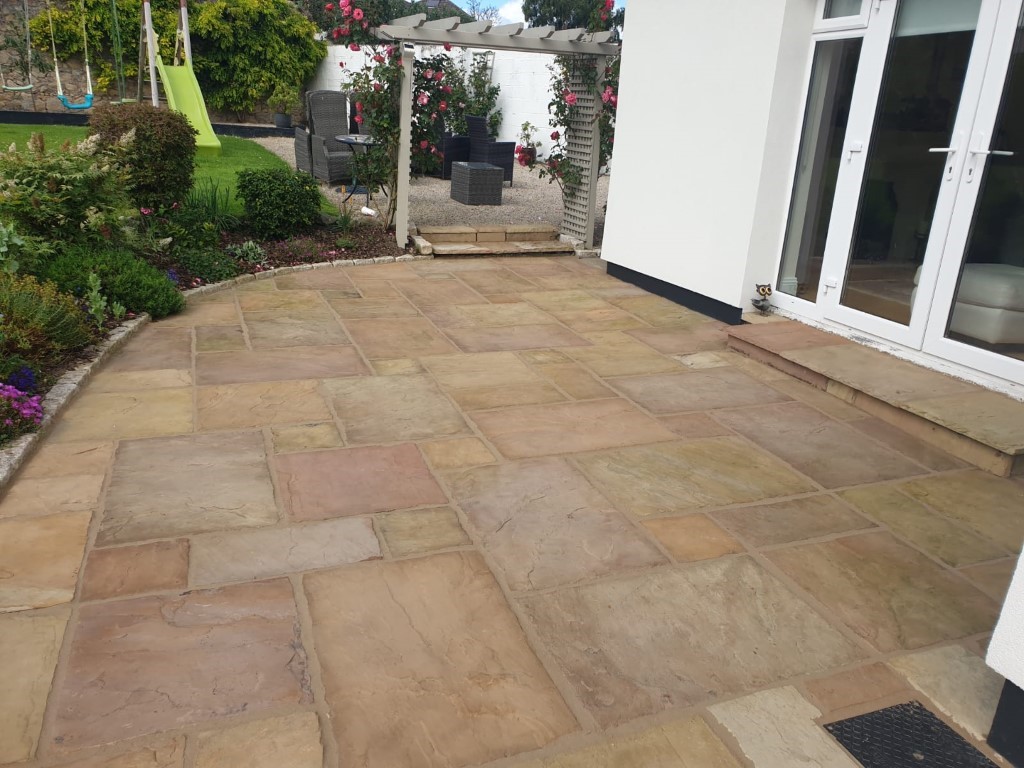


Creating steps and managing level changes transforms a basic patio into a sophisticated outdoor space. Many Warwick gardens have natural slopes that make multi-level patios both practical and attractive.
The key to successful stepped patios lies in getting the proportions right. Each step should have a tread depth of at least 300mm and a rise no higher than 150mm. This creates comfortable movement between levels.
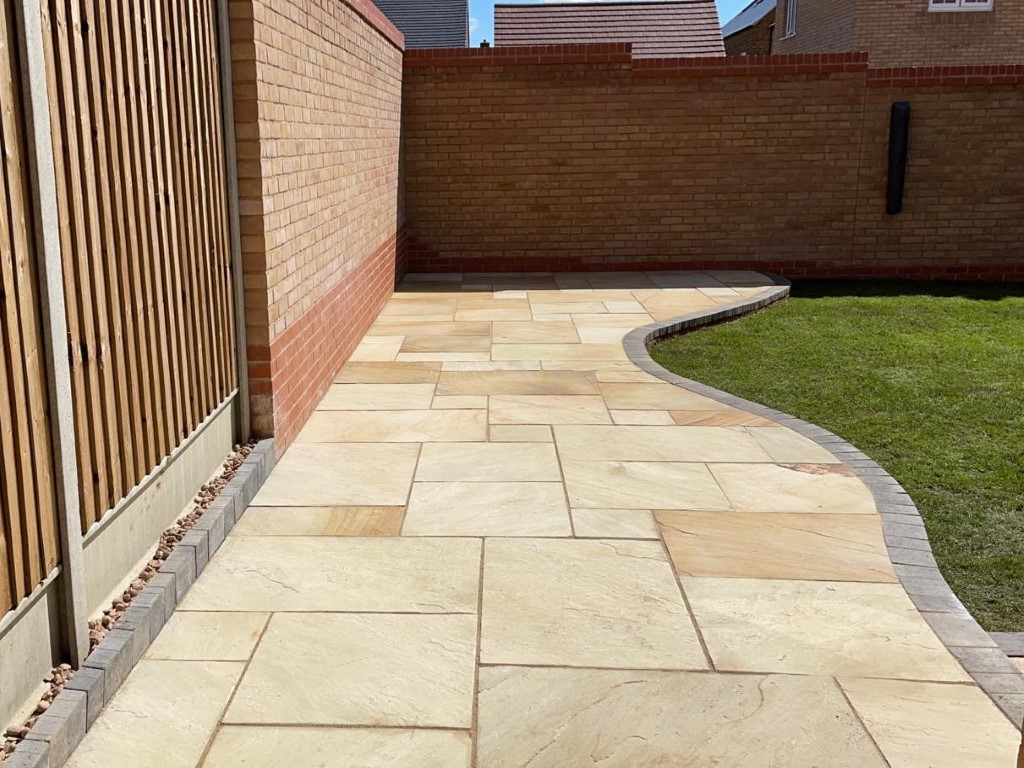
Planning Your Level Changes
Start by measuring the total height difference across your garden. Divide this by 150mm to calculate how many steps you’ll need. Remember that wider steps feel more welcoming than narrow ones.
- Mark out step positions with spray paint
- Check sightlines from house windows
- Consider where people will naturally walk
- Plan lighting positions early in the design
For complex layouts, professional paving contractors recommend detailed planning before excavation begins.
Construction Methods
Most stepped patios use either built-up construction or cut-and-fill methods. Built-up steps work well on gentle slopes, using retaining blocks or walls to create the levels.
Cut-and-fill involves excavating the higher areas and using that soil to build up lower sections. This approach suits steeper gardens but requires proper drainage behind retaining structures.
Material Considerations
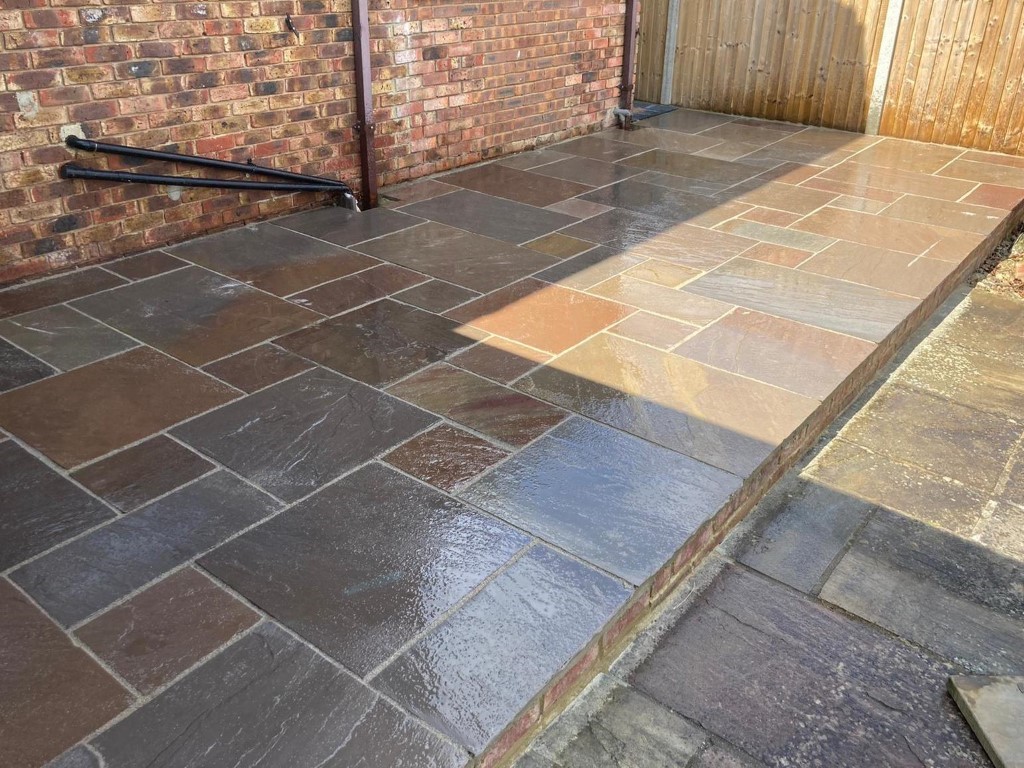
Choose materials that provide good grip when wet. Smooth concrete slabs can become slippery, whilst textured stone or block paving offers better traction.
- Natural stone: durable but can be expensive
- Concrete slabs: cost-effective with many texture options
- Block paving: flexible and easy to repair
- Brick: matches period properties well
The visual connection between levels matters too. Using the same material throughout creates unity, whilst contrasting step edges can define each level clearly.