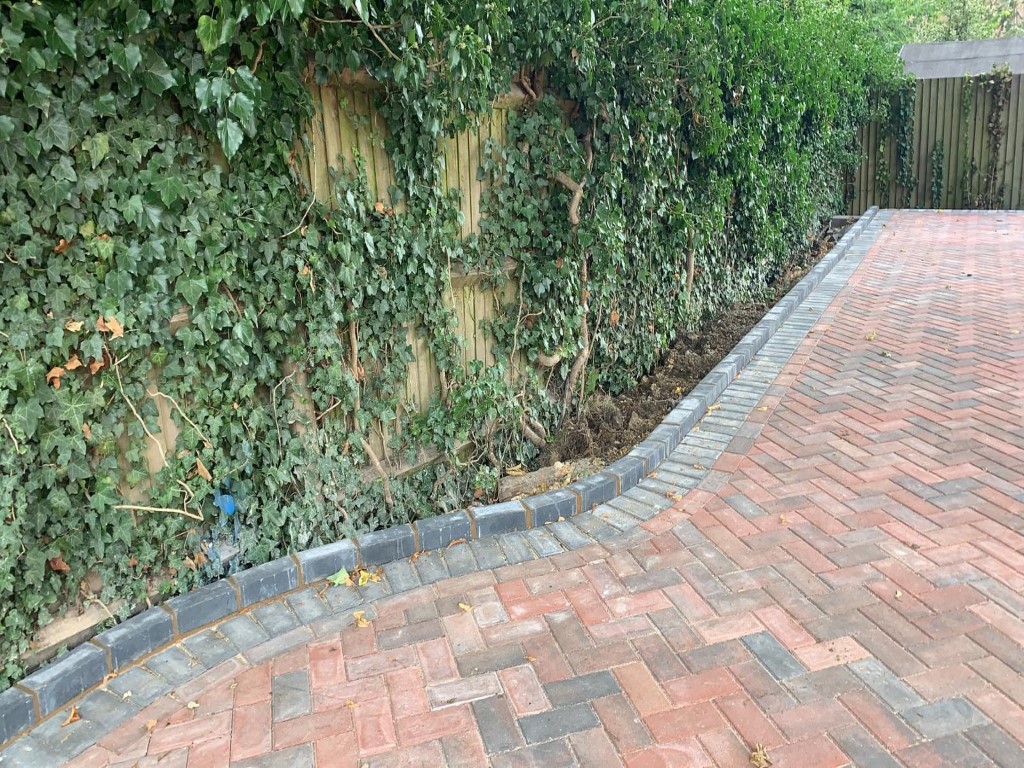


Block paving driveways need fresh sand between the joints every few years to maintain their stability and appearance. The sand locks the blocks together and prevents weeds from taking hold.
Clay soil and wet winters mean sand washes away faster than in drier areas. Most block paved drives need re-sanding every 2 to 3 years, depending on drainage and traffic levels. When professional re-sanding becomes necessary, timing matters for best results.
When Your Driveway Needs Re-sanding
Look for these clear signs that your block paving needs attention:
- Gaps between blocks wider than 3mm
- Loose or wobbly blocks when walked on
- Weeds growing between blocks
- Sand visibly missing from joints
- Water pooling on the surface instead of draining
Choosing the Right Sand
Use kiln dried jointing sand, not builder’s sand or play sand. Kiln dried sand contains no moisture and compacts properly between the blocks.
Sharp sand works well for most domestic drives. For heavy traffic areas, consider polymeric sand which hardens when wet and resists washing out.
The Re-sanding Process
Clean the driveway thoroughly first, removing all weeds and debris from the joints. A stiff brush or pressure washer works well for this.
Pour the sand over the blocks and brush it into the joints with a soft broom. Work in sections to ensure even coverage.
Compact the sand by running a plate compactor over the surface, or use a rubber mallet on smaller areas. Add more sand and repeat until joints are full.
Finally, brush away excess sand from the block surfaces and give the area a light spray with water to help the sand settle.